
QSC brand logo

VENUE REQUIREMENTS

QSC system choices change with the room

A touring stage, lecture hall, cinema and hotel campus can use related audio building blocks, but they do not share the same coverage geometry, duty cycle, control permissions or service access.

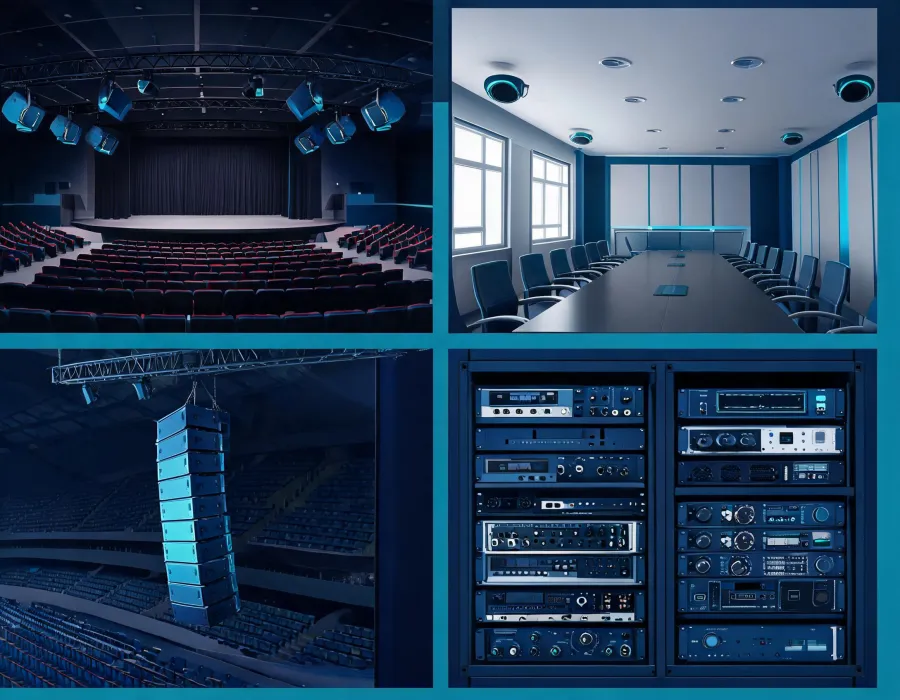
Sectional view of several professional audio venue types

FOUR AUDIO JOBS

Define the failure mode before selecting the system

Each card identifies the operational question that can alter cabinet type, signal distribution or commissioning depth.

01

Live sound & touring

Fast rigging, truck pack, changing stages and high program crest factor make repeatable presets valuable. Coverage prediction must be checked against the actual trim height and splay, while venue curfews can limit full-level testing.

  • Flown load and sightline review
  • Array geometry and front-fill timing
  • Strike-safe cable and preset control
02

Performing arts & worship

Speech gain-before-feedback and musical dynamics must coexist with architecture. Reflective rooms may benefit more from controlled directivity and source placement than from additional equalization.

  • Speech intelligibility by seating tier
  • Microphone and monitor interaction
  • Quiet cooling and service access
03

Corporate & education

Distributed rooms require predictable daily startup, conferencing echo-control boundaries and permissions suited to nontechnical operators. Network recovery should be tested, not assumed.

  • Ceiling or wall coverage zones
  • Remote source and room combining
  • Fallback route after network loss
04

Hospitality & retail

Many zones, long operating hours and changing staff place emphasis on limiter protection, source priority and maintainable rack layouts. Music level targets differ from emergency paging obligations.

  • Zone naming and schedule logic
  • Background-music consistency
  • Local control without core access

METHOD TRADE-OFFS

There is no universal winner between these system paths

Selection depends on geometry, service model and evidence quality. The comparison avoids naming competitors because project-specific documents, not broad brand claims, should decide the route.

DecisionPath APath BWhat to verify
Point source vs line arrayFewer sources, compact installation, direct coverageAdjustable vertical geometry for longer audience areasPrediction, trim height, overlap, rigging load and nearby-seat level
Powered vs passive loudspeakersShort speaker-level path and integrated processingCentralized amplification and rack service accessMains distribution, cable distance, cooling, inventory and replacement workflow
Local vs networked controlSimple isolated operationVisibility and routing across roomsClock ownership, switch design, permissions, latency and recovery after interruption
Single-position vs spatial measurementFast diagnostic at one seatMultiple seats reveal consistency and outliersMicrophone calibration, window, source level and documented position coordinates

Boundary disclosure

A prediction cannot represent occupied-room absorption unless the model includes it. A transfer-function trace cannot prove subjective program quality. Equalization cannot restore direct sound where geometry leaves a seat outside coverage, and additional subwoofers can increase spatial variation when placement and delay are not planned.

DESCRIBE THE VENUE

Match a QSC product category to an acoustic job

Send audience dimensions, mounting options, program type, exposure conditions and operator model. The response can focus on viable system paths and the tests needed to separate them.